LoqSat
Orbital coordination infrastructure for spacecraft operators.
LoqSat connects spacecraft operators into a shared coordination environment designed for safer operations in increasingly crowded orbital regions.
The system combines distributed spacecraft coordination with governed execution powered by Reydious.
The Problem
Orbit is becoming crowded.
Thousands of satellites now share the same regions of space. More are launching every year. Operators must coordinate maneuvers, avoid conflicts, and understand how their spacecraft interact with others.
Today much of this coordination still happens through fragmented tools, limited data sharing, and manual communication between operators.
As orbital traffic increases, these approaches become harder to manage.
Operators need infrastructure designed for a shared orbital environment.
LoqSat is built to support that coordination.
System Approach
LoqSat combines three core capabilities that support coordination across distributed spacecraft systems.
A shared coordination environment connecting spacecraft operators.
- operator discovery and participation
- structured exchange of operational information
- shared awareness of spacecraft activity
- support for maneuver coordination between participants
LoqSat supports spacecraft platforms designed to integrate new capabilities without redesigning entire systems.
- modular spacecraft architecture
- rapid integration of payloads and mission tools
- flexible infrastructure for evolving missions
LoqSat supports clusters of small satellites operating together as coordinated systems.
- multiple satellites working as one operational system
- shared subsystem roles across spacecraft
- coordinated positioning and movement
Operational Environments
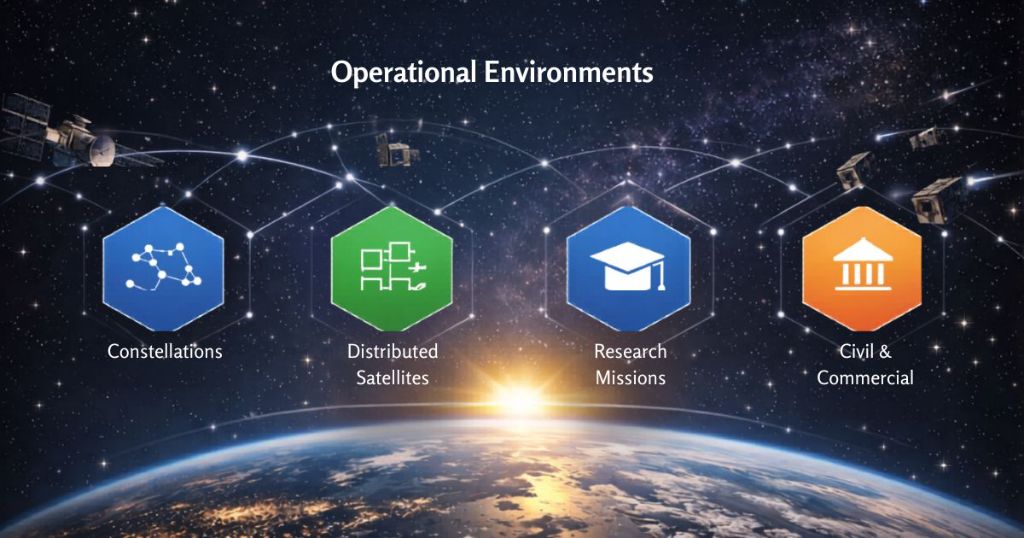
LoqSat is designed for orbital environments where multiple spacecraft operators share the same operational space.
Target use cases include:
- small satellite constellation operators
- distributed spacecraft missions
- research and university satellite programs
- commercial space companies
- civil space agencies
Powered by Reydious
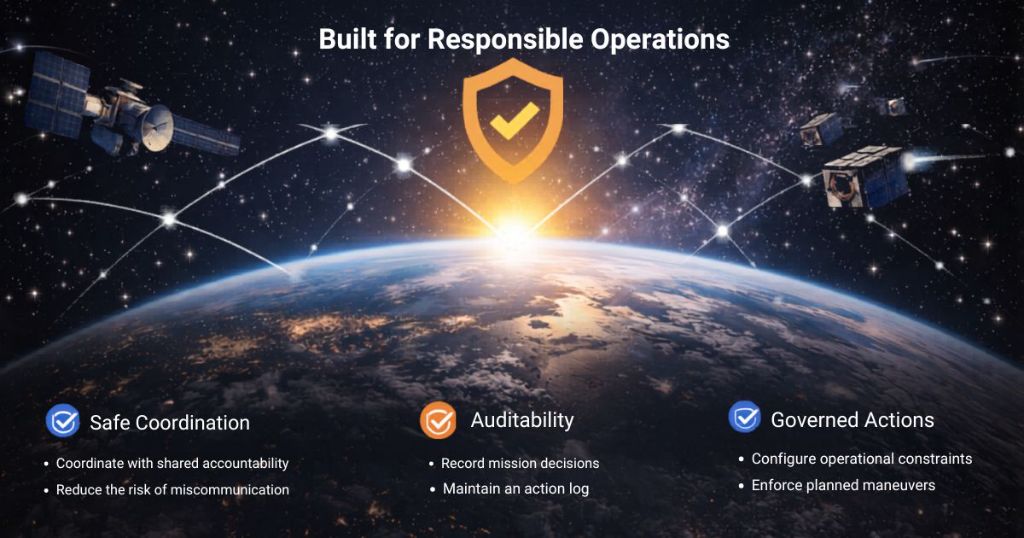
LoqSat operates on the Reydious execution governance platform.
Reydious structures operational decisions and governs how actions occur across distributed spacecraft environments.
The system records operational context, validates actions against defined constraints, and maintains a clear record of mission decisions.
This helps support responsible and accountable spacecraft operations.
Who This Is For
LoqSat is designed for organizations operating spacecraft in shared orbital environments.
Organizations
- satellite constellation operators
- small satellite mission teams
- research institutions and universities
- civil and commercial space programs
Decision Makers
- mission operations leaders
- flight dynamics teams
- program managers for satellite missions
- spacecraft systems architects
Pilot Invitation
LoqSat is currently seeking 3 to 5 pilot partners operating spacecraft or planning distributed satellite missions.
Pilot objectives include:
- coordination workflows between operators
- maneuver coordination procedures
- distributed spacecraft management
- structured decision logging
- integration with existing mission operations tools
Program Status
LoqSat is currently in early architecture development and seeking pilot partners to evaluate coordination workflows and distributed spacecraft operations.
Pilot programs will help refine the operational environment and validate coordination capabilities with real mission teams.